
FIELD NOTES / PROPERTY & PLACES
Drone photography
or video?
Which does your property need?
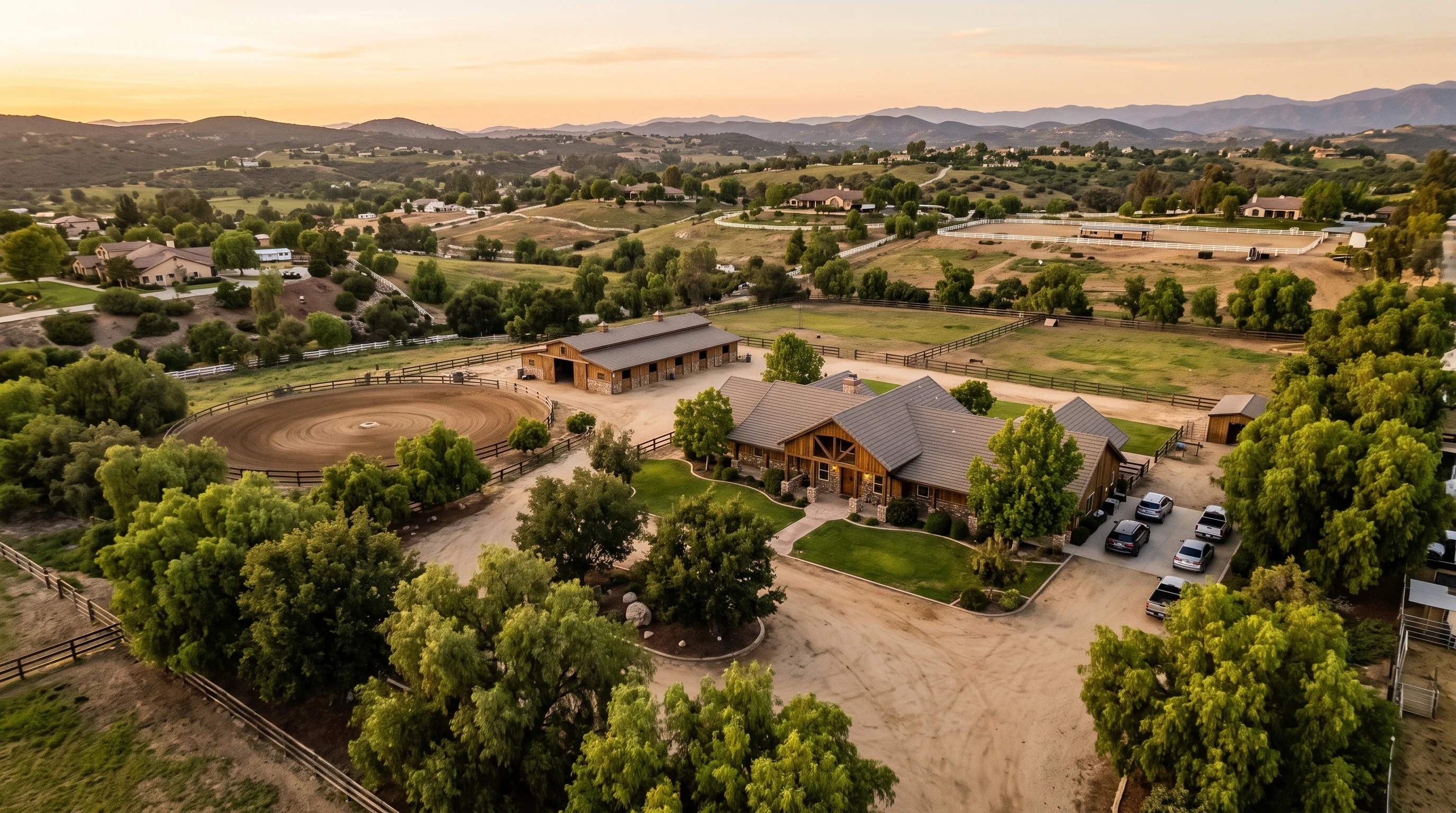
Choose aerial photographs when people need to understand a place quickly. Choose drone video when you want to reveal how that place feels as you move through it. If your property needs to do both jobs, plan the two formats together.
That is a more useful starting point than deciding which format looks more impressive. A still image and a moving sequence ask different things of the viewer. The right choice depends on what you need them to notice, where they will see it, and what you want them to do next.
Start with where the work will appear
Before planning a flight, list the places the finished images will live. A property listing, a website header, a venue brochure and an Instagram Reel all have different shapes and demands.
For a listing or a page that someone will scan, a strong photograph can communicate the setting immediately. For a short social film or a website introduction, movement can build a sense of arrival. If the same material needs to work vertically and horizontally, include that in the brief from the beginning rather than hoping one crop will suit everything.
Choose photographs for clarity
Aerial photographs let someone pause, compare and look closely. They are especially useful when the story is about the relationship between features: a house and its grounds, a venue and its outdoor spaces, or a building within a wider landscape.
Think in terms of a small set of purposeful views. One frame might establish the setting. Another could bring attention to a courtyard, an approach or a distinctive feature. A closer composition can add detail without losing the elevated perspective.
The question for each photograph is simple: what does this help the viewer understand that they could not see as clearly from the ground?
Choose video for a sense of place
Video is useful when the order of the views matters. A reveal can introduce the setting before showing the property. A measured approach can lead the eye towards an entrance. A wider closing view can put everything back into context.
More movement does not automatically make a stronger film. A few considered sequences are often a better creative brief than a long list of dramatic manoeuvres. Give the viewer enough time to notice what matters, and decide what the film should say before deciding how the camera should move.
For a venue, that might be the journey from arrival to the main gathering space. For a destination, it could be the connection between the buildings and the surrounding scenery. These are planning examples, not a fixed shot list for every location.
When both formats make sense
If you need a website, listing images and social content, photographs and video can serve different parts of the same story. Still images provide clear reference points; a film gives those views a rhythm and a sequence.
Brief both explicitly. A frame composed for a photograph may need different timing or positioning from a moving shot. Tell us which format matters most, which views are essential, and where you have room to experiment. That gives the shoot a clear priority if the available time or conditions change.
Five things to include in your brief
- The location. Share the address or a map link so the setting can be considered.
- The purpose. Are you introducing a venue, presenting a property, or telling a wider brand story?
- The features that matter. Pick the two or three details viewers should remember.
- The intended placements. Include the websites, print uses and social formats you have in mind.
- Your timing. Share your preferred date, any access arrangements and how flexible the schedule can be.
Every shoot also needs a practical conversation about the location, conditions and operating requirements. Treat timing and flight plans as something to confirm together, rather than a promise attached to a particular reference image.
Give the view a job to do
For a property in Temecula or elsewhere in Southern California, the strongest brief starts with the place itself. What is distinctive about it? What is hard to appreciate from the ground? What should a potential visitor or buyer understand after looking?
Answer those questions first. The choice between photography, video and a combination becomes much clearer.